Knowledge Graph for Lawyers and Law Firms - Build Institutional Memory Without Exposing Client Data
Legal work is knowledge work under strict confidentiality constraints. Teams need to reuse precedent, recover reasoning, and track obligations across matters - but they cannot casually send internal documents to external systems.
That is exactly where a private legal knowledge graph becomes useful.
Instead of treating each matter folder as an isolated archive, you connect entities across your internal corpus: clients, matters, clauses, obligations, timelines, statutes, filings, outcomes, and internal guidance. The result is faster research, better drafting consistency, stronger handoffs, and reduced risk from hidden dependencies.
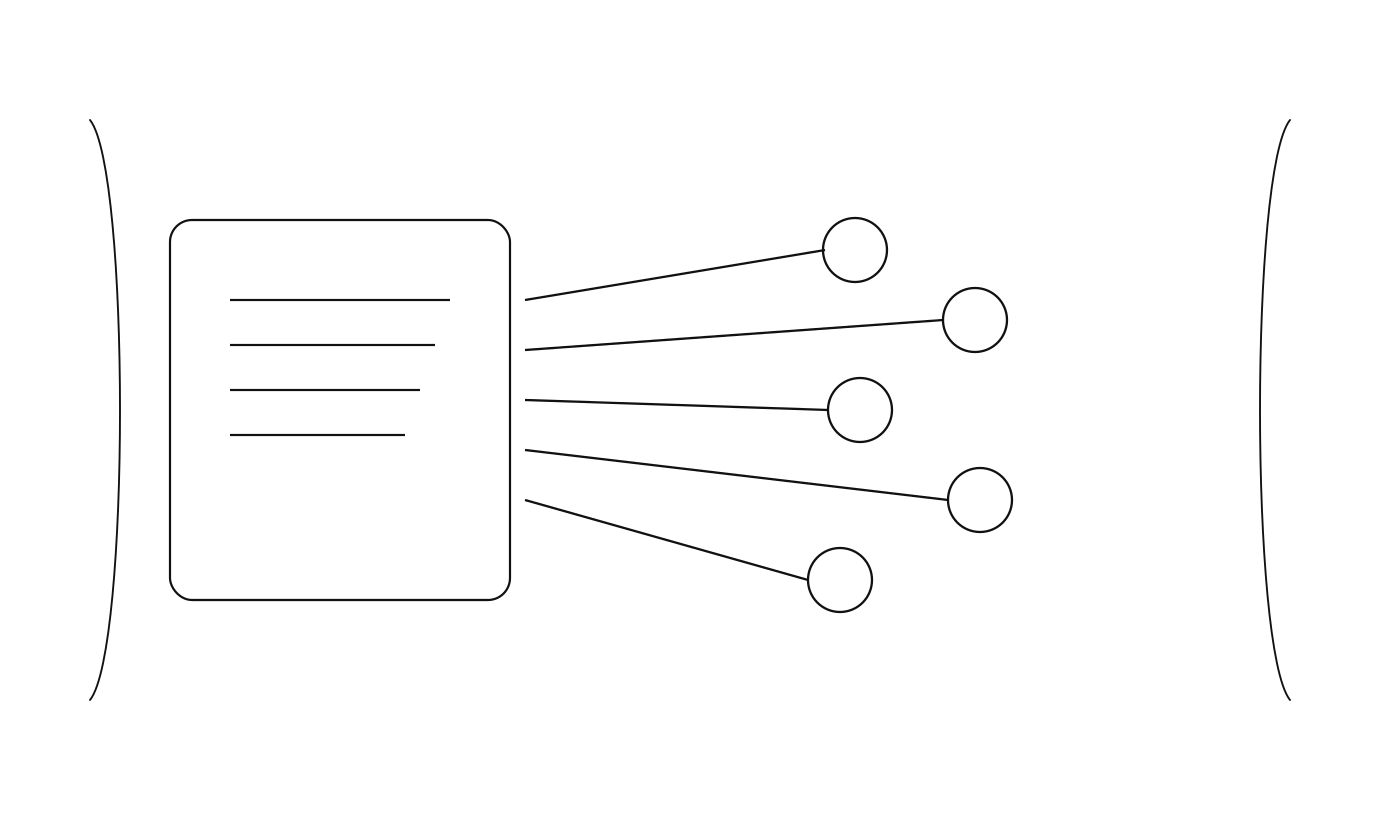 A graph turns scattered legal documents into connected institutional memory.
Why law firms need a graph model now
Most firms already have massive internal value trapped in:
- executed agreements and redlines
- matter memos and strategy notes
- due diligence binders
- negotiation patterns by counterparty
- filing timelines and hearing outcomes
- internal playbooks and clause libraries
But retrieval is usually document-first, not relationship-first.
Document search answers "where is a similar file?" A graph answers "what is connected to this issue, and what happened last time under similar constraints?"
For lawyers, that difference matters because legal risk usually sits in relationships:
- this clause conflicts with that obligation
- this exception depends on that jurisdiction
- this deadline triggers that notice requirement
- this negotiation outcome changed after that fallback language
What a legal knowledge graph should contain
A practical graph does not need every possible legal concept on day one. Start with entities that repeatedly drive legal decisions.
Recommended v1 entity model
At minimum, include:
- Client (industry, risk profile, preferred fallback positions)
- Matter (type, status, jurisdiction, opposing party, lead attorney)
- Document (agreement, policy, filing, memo, email summary)
- Clause (topic, canonical intent, variants)
- Obligation (owner, due date, trigger, dependency)
- Issue (risk category, severity, open/closed)
- Authority (statute, case, regulation, internal policy reference)
- Outcome (approved language, negotiated terms, dispute result)
High-value relationships
Model these edges early:
MATTER_USES_CLAUSECLAUSE_HAS_VARIANTCLAUSE_MITIGATES_ISSUEOBLIGATION_TRIGGERED_BY_EVENTAUTHORITY_SUPPORTS_INTERPRETATIONOUTCOME_RESULTED_FROM_STRATEGY
 Even a small, consistent ontology can unlock major retrieval improvements.
Privacy and compliance architecture (non-negotiable)
For legal contexts, architecture choices are governance choices. The safest pattern is local or controlled-environment processing with explicit evidence trails.
Recommended boundaries
-
Ingestion boundary
Pull only approved repositories and document stores. -
Extraction boundary
Run parsing and enrichment in private infrastructure (on-prem or private cloud). -
Storage boundary
Keep raw documents separate from graph triples; connect via internal IDs. -
Access boundary
Enforce role-based access to graph queries and evidence previews. -
Audit boundary
Log who queried what, when, and which evidence was returned.
End-to-end implementation plan (detailed)
This section is designed as a practical rollout sequence that legal ops, KM, and engineering can execute together.
Phase 1: Scope and corpus selection (Week 1)
Define the first narrow use case. Good starting points:
- faster MSA fallback language retrieval
- obligation tracking across active commercial matters
- due diligence issue clustering for M&A workflows
Then select a bounded corpus:
- one practice area
- one office or team
- 12-24 months of relevant matters
Success criteria for Phase 1:
- at least 80% of target documents ingested
- matter metadata normalized
- baseline retrieval quality measured
Phase 2: Data normalization and redaction policy (Week 1-2)
Before graph extraction, normalize input quality:
- unify matter IDs and naming conventions
- deduplicate near-identical versions
- standardize document type labels
- detect and mark privileged / restricted content
Define redaction and visibility policy at this stage, not later:
- which users can view full text
- which users can see summary-only evidence
- when PII masking is required in query results
Phase 3: Structural extraction (Week 2)
Extract deterministic signals first:
- headings, sections, and clause blocks
- references to parties, dates, amounts, notice windows
- obligation-style language patterns ("must", "shall", "within X days")
- citations and cross-references
Persist each extraction with provenance:
- source document ID
- page or section location
- extractor version
- timestamp
Phase 4: Semantic enrichment (Week 2-3)
Add legal meaning layers on top of structure:
- clause intent classification (liability cap, indemnity, termination, IP ownership)
- risk label assignment (compliance, litigation, financial exposure, operational dependency)
- negotiation state tagging (accepted, fallback, countered, unresolved)
- jurisdiction-specific nuance tags
Keep enrichment outputs inspectable. Avoid black-box labels without supporting evidence.
Phase 5: Graph assembly and indexing (Week 3)
Create canonical nodes and merge duplicates carefully:
- same client across naming variants
- same clause family across wording variants
- same authority cited in different citation formats
Add query indexes around top operational workflows:
- matter + clause topic
- clause topic + jurisdiction
- obligation owner + due date window
- issue severity + matter status
Phase 6: Query interfaces where lawyers already work (Week 3-4)
Adoption improves when access is embedded into existing workflow surfaces:
- matter workspace panel in your DMS
- drafting assistant panel in document editor
- litigation prep dashboard
- internal chat bot backed by graph + evidence
Interface behavior should be strict:
- answer with concise synthesis
- show linked evidence every time
- expose confidence and recency
- support one-click "open source document section"
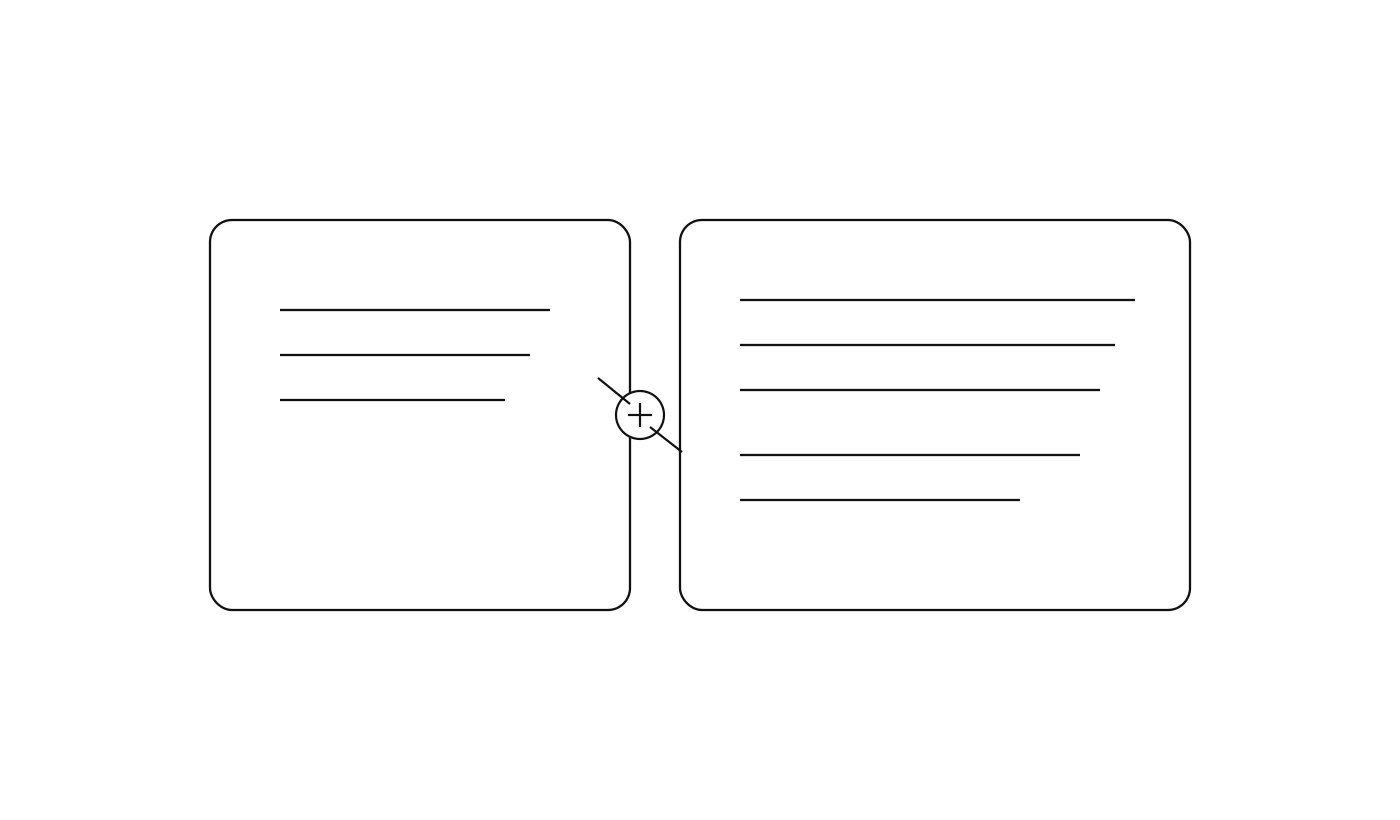 Evidence-linked answers drive trust and reduce hallucinated legal conclusions.
How to get better results (quality playbook)
Many legal graph projects stall because they optimize model sophistication before data discipline. Better outcomes come from operational rigor.
1) Build a gold dataset for evaluation
Create a small adjudicated benchmark:
- 100-300 real retrieval questions
- expected answers
- accepted evidence references
- pass/fail rubric by practice team
Use this benchmark after every extractor or model update.
2) Separate extraction quality from answer quality
Track two layers independently:
- Graph quality: precision/recall of entities and relationships
- Answer quality: usefulness, correctness, and evidence adequacy
Without this split, debugging becomes guesswork.
3) Add human-in-the-loop correction loops
Let senior associates and KM reviewers correct:
- incorrect clause classification
- missing links between related obligations
- false precedent matches
Feed corrections back into extraction rules and prompts.
4) Prioritize recency and jurisdiction in ranking
A perfect historical match can still be wrong if:
- it is outdated
- it applies to a different jurisdiction
- internal policy has changed since
Ranking should weight:
- recency
- jurisdiction match
- matter type proximity
- partner/team preference profiles
5) Keep canonical clause families curated
Clause sprawl reduces retrieval value. Maintain canonical clusters:
- primary clause family
- approved fallback set
- unacceptable variants
- linked rationale and prior outcomes
Example legal workflows improved by a graph
Contract drafting and negotiation
Before drafting, query:
- recent accepted positions by counterparty type
- fallback ladder by risk tolerance
- known redline friction points by clause topic
During negotiation:
- detect when a proposed edit introduces conflict with existing obligations
- suggest historically accepted alternatives
- flag clauses that triggered disputes in similar matters
Due diligence review
For M&A or financing diligence:
- cluster recurring risk findings across target documents
- map obligations to responsible teams post-close
- surface hidden dependencies (e.g., notice obligations tied to change-of-control)
Litigation and regulatory response
For disputes and investigations:
- connect allegations to internal policy history
- retrieve related prior filings and outcomes
- map timeline dependencies and potential evidence gaps
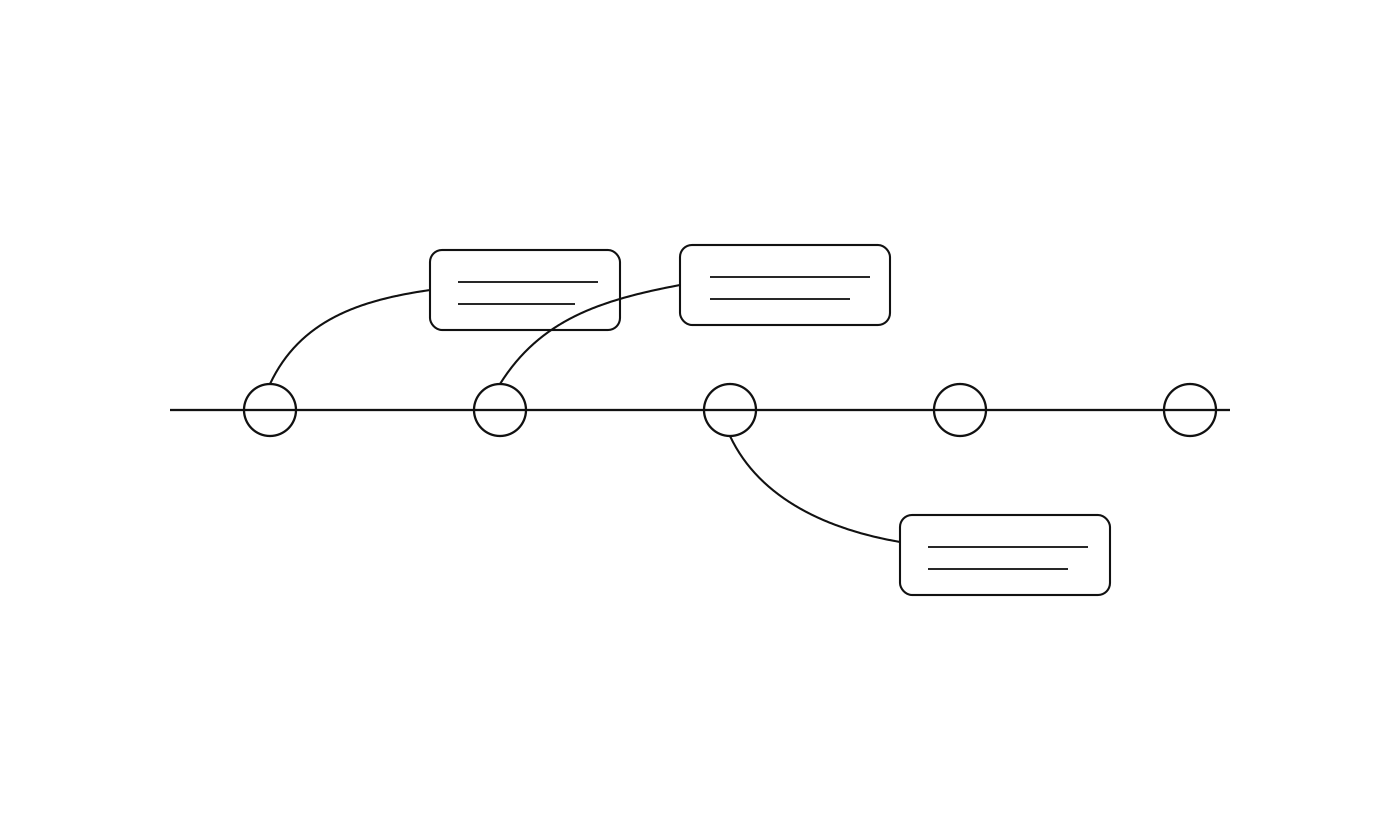 Timeline-aware graph views help teams prevent missed obligations and weak handoffs.
Operating model for law firms (people, process, governance)
Technology alone will not create durable legal memory. Define ownership clearly:
- Knowledge management: ontology stewardship and clause family curation
- Legal ops: workflow integration and usage analytics
- Practice leads: quality approval for high-risk domains
- Engineering/data team: extraction reliability, indexing, and performance
- Security/compliance: access controls, logging, retention policy
Run a monthly governance review with:
- new entity requests
- disputed classification rules
- retrieval quality trendline
- policy updates affecting access or redaction
Metrics that matter to firm leadership
Track impact beyond simple search volume:
- reduction in time-to-first-draft
- improvement in first-pass partner acceptance rate
- lower repeat research effort for common clause topics
- fewer missed obligation deadlines
- faster onboarding for new associates
Tie outcomes to real business value:
- improved matter profitability through reduced non-billable research overhead
- reduced risk from inconsistent language
- better continuity when teams change mid-matter
90-day rollout roadmap
Days 1-30: Foundation
- choose one practice area and corpus
- finalize ontology v1
- set governance and access policies
- ship ingestion + structural extraction
Days 31-60: Intelligence
- add semantic enrichment and risk tagging
- launch benchmark-based evaluation loop
- integrate evidence-first query experience
- pilot with one legal team
Days 61-90: Adoption and scale
- close quality gaps from pilot feedback
- expand to additional matter types
- publish playbooks for drafting and diligence workflows
- report measurable business outcomes
Common failure modes to avoid
- Ontology overengineering before validated use cases
- No provenance in answers, causing trust collapse
- Loose access controls that ignore matter sensitivity
- No benchmark testing before model/extractor updates
- No workflow integration into drafting and review tools
Final takeaway
Law firms do not need to choose between confidentiality and intelligence.
A private legal knowledge graph lets teams institutionalize precedent, improve drafting quality, and reduce risk while keeping client data inside controlled boundaries. The key is disciplined implementation: evidence-first outputs, strong governance, and continuous quality measurement.
If your team already has years of legal work product, you already have the raw material. The opportunity is to make that memory connected, reviewable, and operational.