
Knowledge Graph for Healthcare Teams - Build Clinical Memory Without Exposing Patient Data
Healthcare systems already generate enormous institutional knowledge: clinical notes, protocols, order sets, care pathways, discharge plans, quality reports, and incident reviews. The problem is not data scarcity. The problem is fragmented context.
A private healthcare knowledge graph connects that context across departments and workflows so teams can make faster, safer decisions - without sending sensitive data outside approved boundaries.
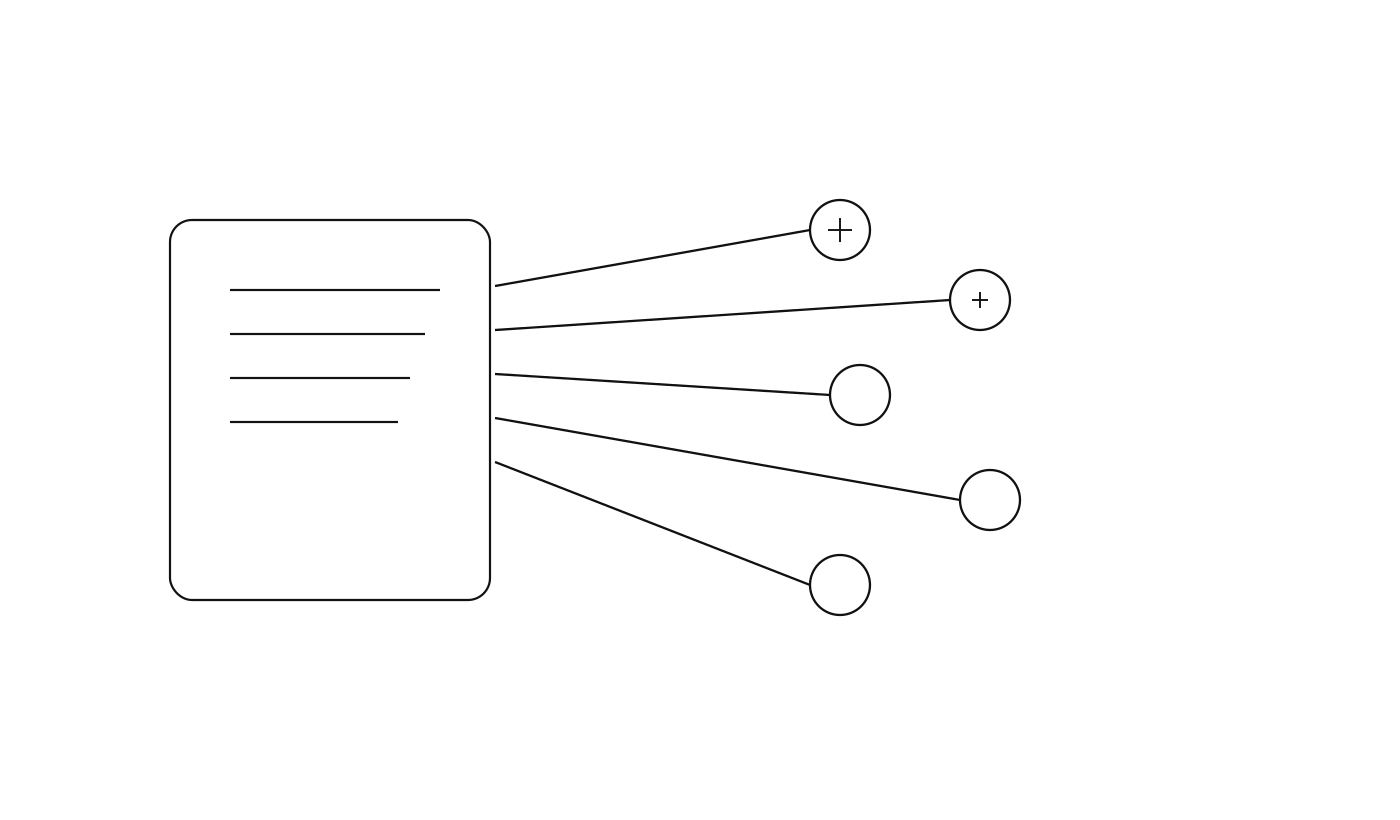 Connected memory helps clinical and operational teams reason with context, not isolated files.
Why healthcare needs graph-native memory
Traditional search is document-first. Healthcare decisions are relationship-first.
Clinical quality often depends on links such as:
- diagnosis -> contraindications -> medication choices
- treatment pathway -> follow-up interval -> readmission risk
- protocol revision -> department adoption -> outcome shift
- care plan -> social determinant -> adherence probability
When these relationships are hidden, teams spend extra time reconstructing context and risk missing important dependencies.
What to model first (v1 ontology)
Start narrow. A focused graph with clear evidence is better than a broad graph that is hard to trust.
Suggested v1 entities
- Patient cohort (de-identified segment metadata)
- Encounter (service line, setting, timestamp, care team)
- Condition (primary, secondary, risk-adjusted)
- Intervention (medication, procedure, care protocol step)
- Outcome (LOS, readmission, adverse event, patient-reported outcome)
- Protocol (versioned guideline, pathway step, exclusion criteria)
- Operational factor (staffing, bed capacity, transfer delay)
- Evidence source (policy doc, quality report, peer-reviewed guideline)
High-value relationships
CONDITION_HAS_PATHWAYENCOUNTER_FOLLOWED_PROTOCOLINTERVENTION_ASSOCIATED_WITH_OUTCOMEOUTCOME_AFFECTED_BY_OPERATIONAL_FACTORPROTOCOL_UPDATED_AFTER_INCIDENTEVIDENCE_SUPPORTS_RECOMMENDATION
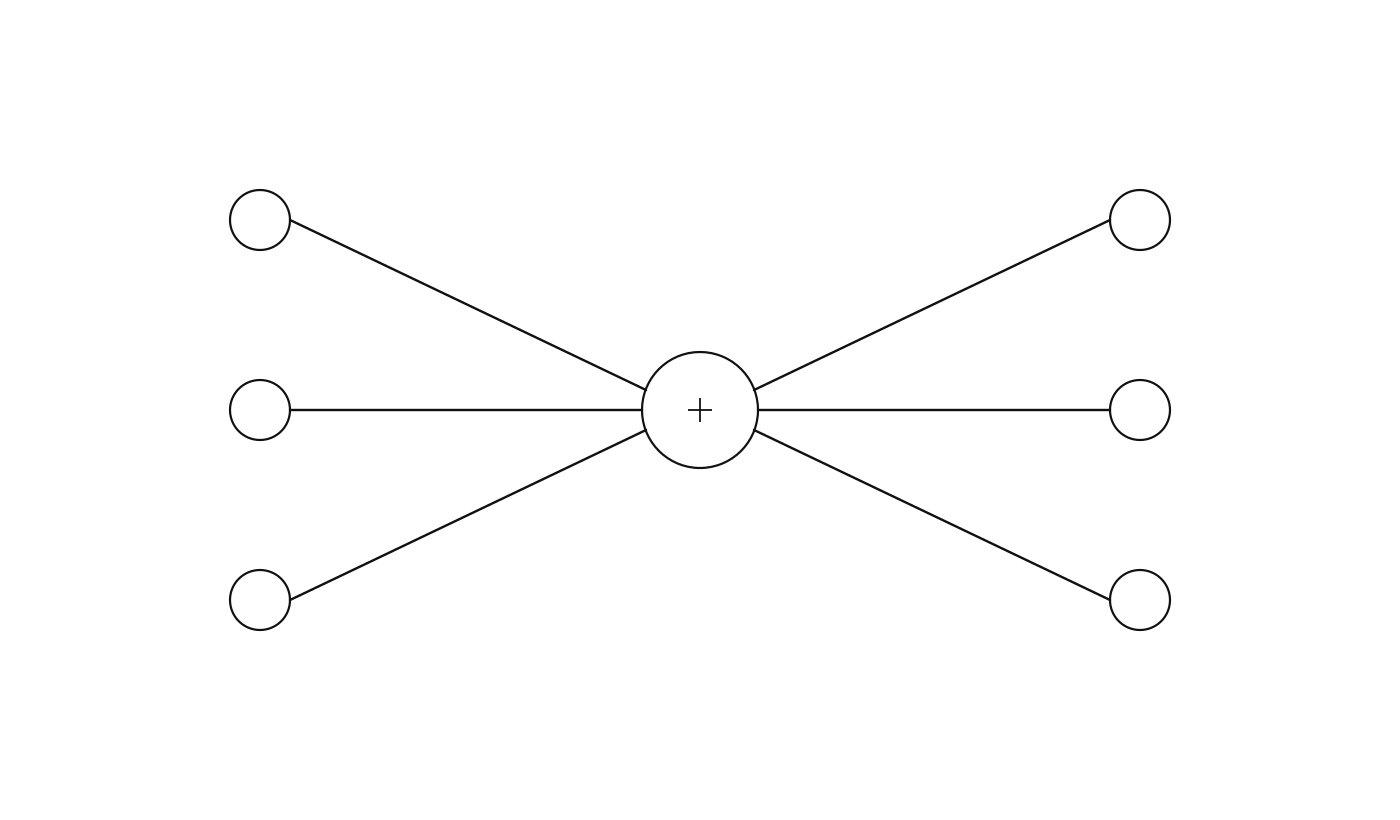 A lightweight ontology can immediately improve retrieval and decision support quality.
Privacy-first architecture for clinical environments
Healthcare deployments must align with internal compliance controls from the beginning.
Recommended boundaries
-
Ingestion boundary
Pull only approved sources (EHR extracts, protocol repositories, quality systems). -
Processing boundary
Run parsing and enrichment in private infrastructure with strict access logs. -
Storage boundary
Separate raw records from graph features and relation layers. -
Access boundary
Enforce role-based access (clinical, operations, quality, compliance). -
Audit boundary
Track query activity, evidence retrieval, and export actions.
End-to-end implementation steps
This rollout is designed for health systems, digital health teams, and clinical ops groups that want reliable outcomes quickly.
Step 1: Define one measurable workflow
Pick a constrained workflow where fragmented context currently causes delay or variation:
- discharge optimization for high-risk conditions
- sepsis pathway compliance improvement
- pre-op readiness and cancellation reduction
- post-acute transition coordination
Define baseline metrics before building:
- time-to-decision
- protocol adherence rate
- preventable readmission rate
- escalation frequency
Step 2: Normalize data and terminology
Normalize naming and coding before enrichment:
- standardize condition and intervention labels
- map local terms to controlled vocabularies
- deduplicate repeated protocol documents
- version protocol artifacts explicitly
At this stage, define de-identification strategy for non-direct-care users.
Step 3: Extract deterministic structure
Begin with high-precision extraction:
- protocol sections and decision branches
- inclusion/exclusion criteria
- intervention timing windows
- outcome definitions and reporting windows
Attach provenance metadata to every extracted node and edge:
- source system
- document/record identifier
- section reference
- extraction timestamp
Step 4: Add semantic enrichment
Layer in clinically meaningful labels:
- pathway stage classification
- risk signal tagging
- bottleneck detection labels
- care variation patterns by service/unit
Use confidence scoring and retain uncertain predictions for review queues.
Step 5: Build graph views that clinicians actually use
Enable practical query flows:
- "show approved pathway variants for this condition profile"
- "where do delays cluster before discharge"
- "what changed in outcomes after protocol v3 adoption"
- "which interventions correlate with reduced readmissions in this cohort"
 Trust increases when answers are concise and evidence-linked.
Step 6: Operationalize refresh and governance
Automate updates:
- on protocol revisions
- on scheduled quality data refreshes
- on validated incident report publication
Define ownership:
- clinical informatics for ontology stewardship
- quality office for metric governance
- engineering/data platform for extraction reliability
- compliance for access and audit controls
How to get better results (practical optimization playbook)
Most graph projects underperform because teams optimize model complexity before process quality. Better outcomes come from disciplined loops.
1) Build a clinical benchmark set
Create 100-250 real questions from clinicians and ops leads. For each:
- expected answer pattern
- acceptable evidence sources
- pass/fail criteria
Run benchmark evaluations after each extraction or ranking change.
2) Separate graph quality from answer quality
Track separately:
- Graph quality: entity/relation precision and recall
- Answer quality: clinical usefulness, correctness, and evidence sufficiency
This avoids conflating retrieval issues with generation issues.
3) Add expert correction loops
Use lightweight review workflows where clinical SMEs can:
- relabel misclassified pathway nodes
- merge duplicate concepts
- flag risky inferred relationships
Feed corrections into extraction rules and ranking weights.
4) Prioritize recency and protocol version
Older but similar evidence can be misleading. Ranking should weight:
- protocol recency
- version compatibility
- cohort similarity
- setting match (ED/inpatient/ambulatory)
5) Surface uncertainty explicitly
For high-stakes workflows, uncertainty is a feature, not a bug:
- show confidence score
- show competing evidence when applicable
- support "review before action" queue
Real healthcare use cases improved by graphs
Clinical pathway adherence
Map where and why pathways diverge. Distinguish justified exceptions from avoidable variability.
Readmission reduction
Connect discharge readiness, social factors, follow-up completion, and medication continuity into one queryable model.
Capacity and flow optimization
Link operational constraints to clinical outcomes so teams can prioritize interventions with measurable impact.
Quality and safety reviews
Shorten root-cause timelines by connecting incidents, protocol revisions, and outcome patterns across units.
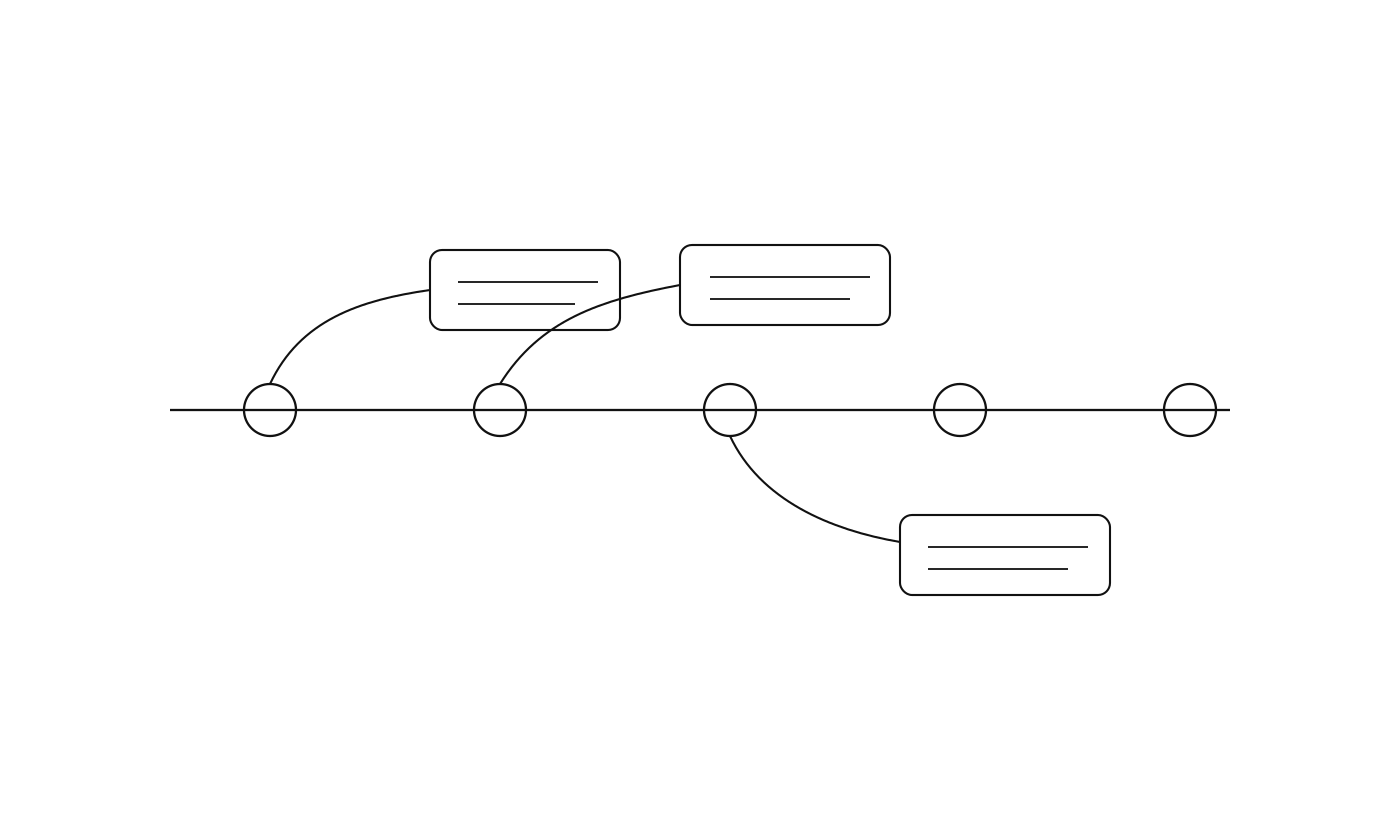 Timeline-aware graph views help teams detect hidden dependency chains before they become adverse events.
90-day rollout plan
Days 1-30: Foundation
- scope one workflow and one service line
- finalize ontology v1
- define governance and access model
- ship ingestion + deterministic extraction
Days 31-60: Intelligence
- add semantic enrichment and confidence scoring
- launch benchmark evaluation loop
- pilot evidence-linked assistant in one team
Days 61-90: Scale
- close precision gaps from pilot review
- expand to adjacent conditions/workflows
- publish operating playbooks and quality dashboards
Common failure modes to avoid
- ingesting too many sources before ontology clarity
- skipping provenance on graph edges
- mixing direct-care and broad analytics access without proper controls
- not benchmarking query quality after updates
- launching a separate tool instead of embedding into existing workflows
Final takeaway
Healthcare organizations do not need to choose between privacy and intelligence.
A private, evidence-grounded knowledge graph can improve clinical consistency, operational efficiency, and decision confidence - while keeping sensitive data inside controlled environments.
If your teams already have protocol and outcomes data, the next step is connecting it into memory that can be queried, validated, and continuously improved.