Build a Knowledge Graph From Your Entire Codebase - Without Sending Your Code to Anyone
Most teams already have the information they need inside their repositories. The hard part is seeing relationships across thousands of files, decisions, and revisions.
A local-first knowledge graph solves that problem. You can map entities, dependencies, concepts, and ownership from your codebase without uploading private source to third-party systems.
 Local extraction means graph intelligence stays inside your boundary.
Why this approach matters now
Codebases are getting larger, but context windows are still limited. Engineers jump between issues, PRs, and services while carrying incomplete mental models.
When every answer starts with "let me find where that lives," delivery slows down.
With a knowledge graph built from your own repository, you can quickly answer:
- Which modules implement a concept end-to-end
- Which services depend on a shared utility
- Which files changed around a decision and why
- Which teams likely own a failing path
What "private by default" looks like
Private by default does not mean zero intelligence. It means inference runs where your code already lives.
In practice, teams usually combine:
- local parsing for structure (imports, classes, functions, docs)
- local concept extraction for higher-level intent
- graph storage in a controlled environment
- selective sharing of graph outputs, not raw code
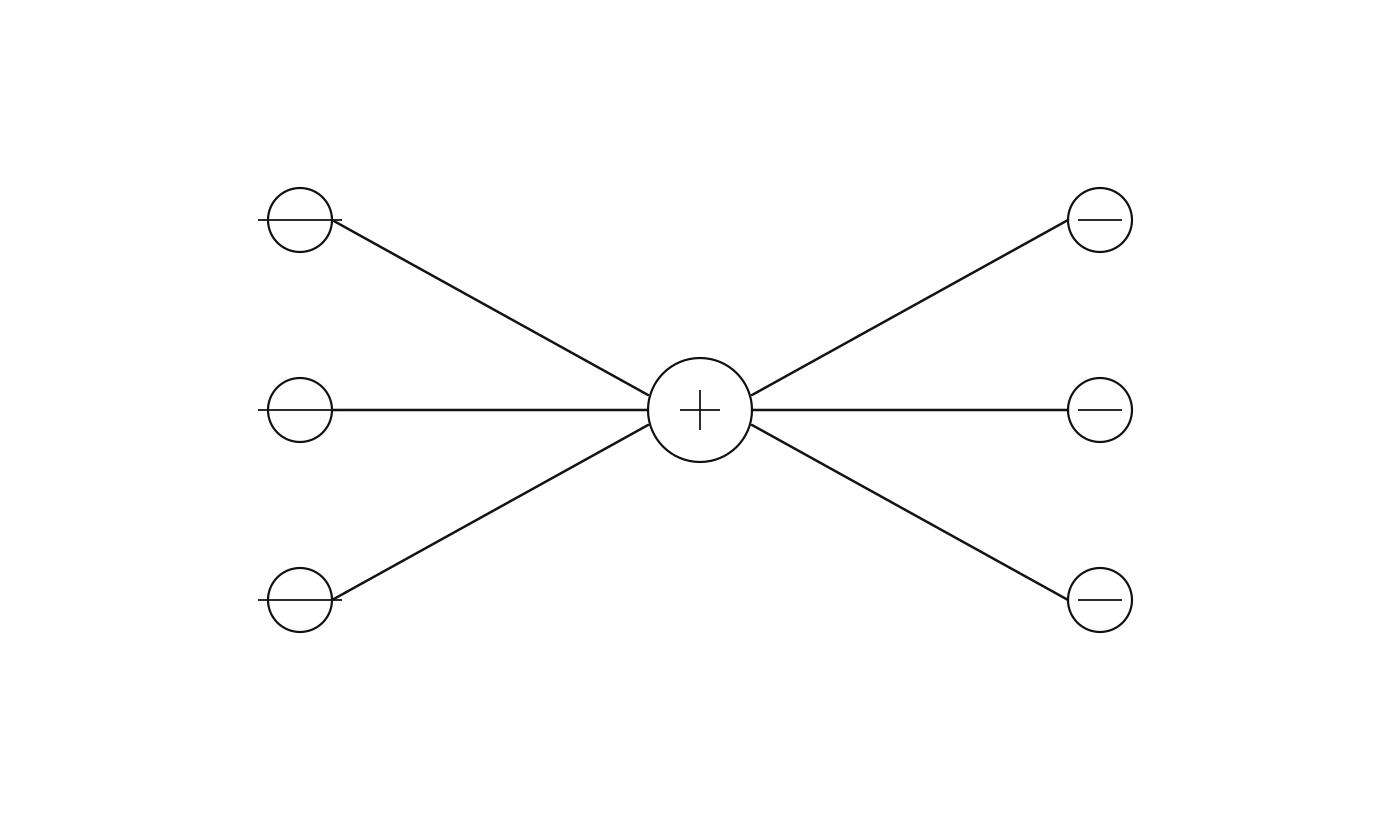 The graph can surface relationships without exposing raw implementation details.
A practical pipeline you can ship this week
You do not need a six-month platform project to start. A lightweight v1 can be enough to create immediate value.
1) Parse the repository structure
Start by indexing repositories, folders, and language-specific AST entities. Keep this deterministic and repeatable so reruns are cheap.
2) Extract stable concepts
Beyond syntax, annotate what a module is for: auth, billing, notifications, onboarding, data sync. This is where semantic retrieval improves.
3) Link with evidence
Every edge in the graph should include source evidence: file path, symbol, commit, or doc snippet. That keeps output trustworthy.
4) Enable query flows
Support simple workflows first:
- "show all auth touchpoints"
- "what changed around webhook retries"
- "what should I read before touching the importer"
5) Automate refresh
Run extraction on commit hooks, CI, or scheduled jobs so the graph stays current without manual effort.
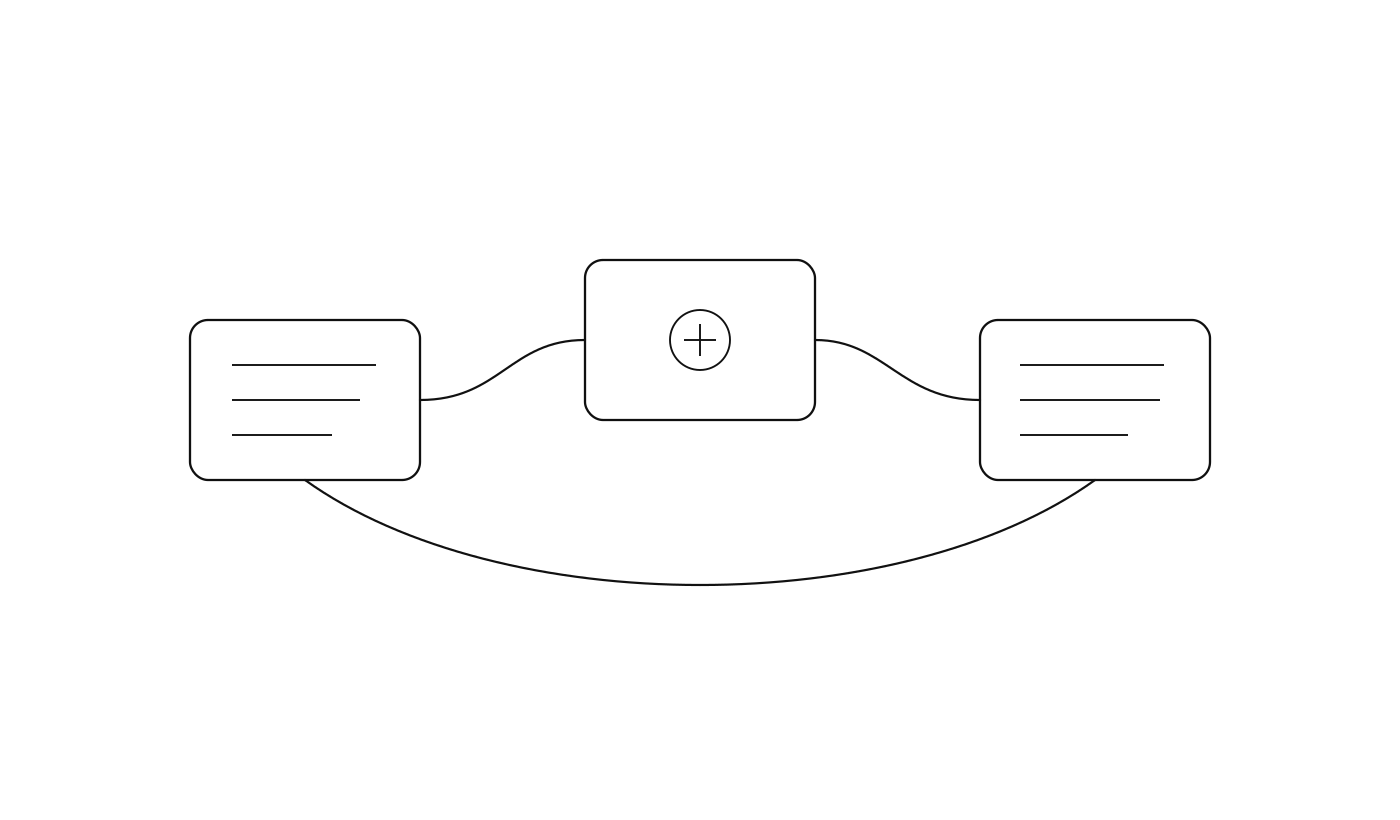 A small automation loop keeps knowledge fresh and searchable.
How to avoid common mistakes
Teams usually fail in one of three ways:
- They over-model early. Start with useful nodes and edges, then expand.
- They skip provenance. If users cannot see where an answer came from, they stop trusting it.
- They ignore adoption paths. Add graph access where engineers already work (editor, PR flow, CLI), not in a separate dashboard nobody opens.
Measuring impact
You should be able to show value within two to four weeks.
Track metrics such as:
- faster onboarding ramp for new engineers
- fewer repeated architecture questions in chat
- shorter "where is this implemented?" search loops
- improved confidence during incident response
Final takeaway
You do not need to trade privacy for velocity.
A local-first code knowledge graph gives teams shared understanding, faster decisions, and stronger continuity while keeping sensitive source code under your control.
If your repository already contains the answers, the next step is making those answers traversable.